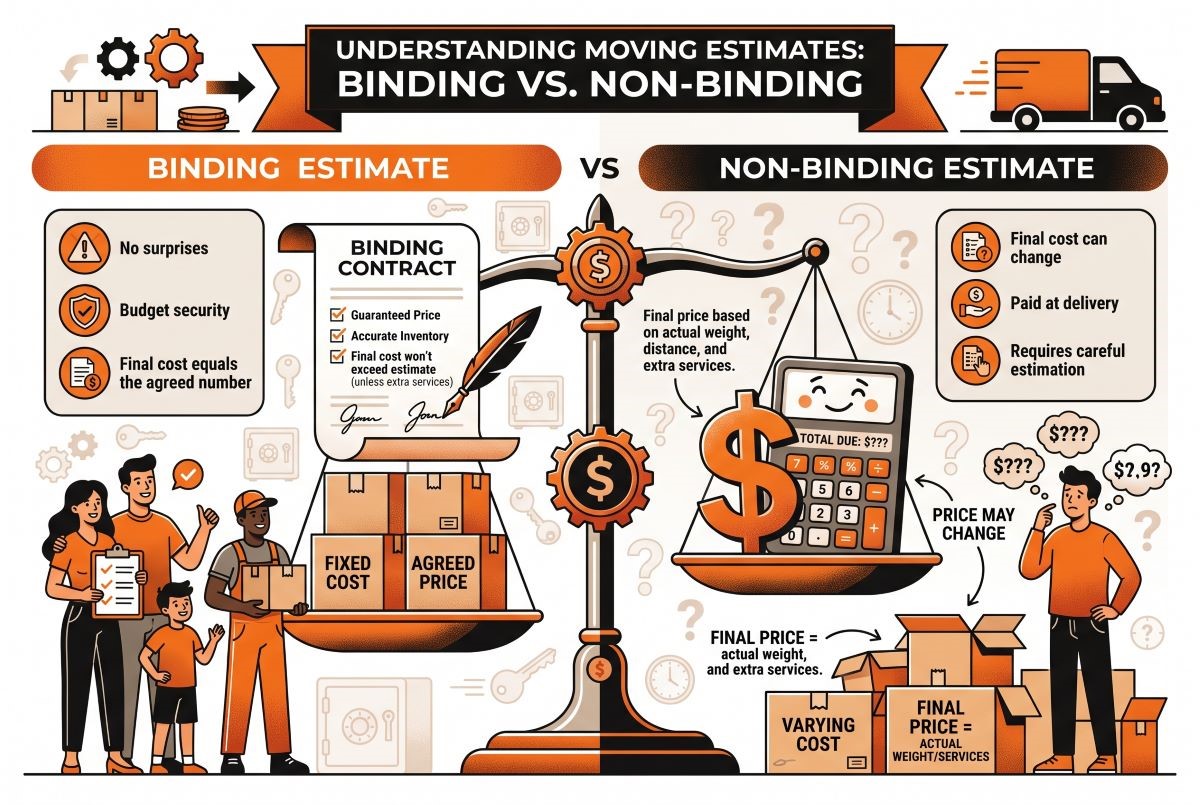
Planning a move involves many decisions, but few are as crucial as choosing the right type of estimate from your moving company. The estimate you accept determines how your final bill is calculated and protects you from unexpected costs on moving day.
When reviewing quotes from professional movers, you will typically encounter two main categories of estimates: binding and non-binding (along with a hybrid option known as binding-not-to-exceed). Understanding the key differences between these options will help you budget effectively and avoid surprises.
1. What is a Binding Estimate?
A binding estimate is a legal agreement between you and the moving company that guarantees a fixed price for the move, based on the estimated weight of your belongings and the services requested.
Key Characteristics:
Fixed Cost: The price stated in the estimate is the exact amount you will pay, regardless of whether the actual weight of your shipment ends up being higher or lower than calculated.
Inventory Accuracy is Critical: The quote is bound strictly to the itemized list (inventory) created during the initial walkthrough. If you add additional boxes, furniture, or request extra services on moving day, the mover can void the binding estimate or issue a revised contract.
Payment Terms: You are expected to pay the guaranteed amount upon delivery, usually before unloading.
Pros & Cons:
Pros: Predictable budgeting, peace of mind, and protection against weight overages.
Cons: You won't save money if your shipment weighs less than estimated.
2. What is a Non-Binding Estimate?
A non-binding estimate is an educated guess or approximation of what your move will cost. The final charge is determined by the actual weight of your goods after the moving truck is weighed on a certified scale, plus any hourly or additional service fees.
Key Characteristics:
Flexible Pricing: The initial quote is not set in stone. If your belongings weigh more than anticipated, your final bill will be higher. If they weigh less, your bill will be lower.
The 110% Rule (Interstate Moves): Under federal regulations for interstate moves in the United States, movers cannot demand more than 110% of the non-binding estimate at the time of delivery. Any remaining balance above 110% must be billed to you with a 30-day window to pay.
Uncertainty: It carries a higher risk of price fluctuations compared to a binding quote.
Pros & Cons:
Pros: Potential savings if you pack light or downsize before moving day.
Cons: Less financial predictability; potential for unexpected cost spikes if weight was underestimated.
3. The Best of Both Worlds: Binding Not-to-Exceed Estimates
Many reputable movers also offer a Binding Not-to-Exceed estimate (sometimes called a "Guaranteed Max" estimate).
Under this agreement:
If the actual weight exceeds the estimate, you only pay the maximum capped price stated in the contract.
If the actual weight is lower than estimated, your final bill is reduced to reflect the lower weight.
This option offers the highest level of protection for consumers whenever available.
Contact the professional movers at Coleman Worldwide Moving today to discuss your long distance move. Fill out our online form or give us a call to schedule an in-home written estimate for your upcoming household move.
Subscribe to Coleman Worldwide Moving's Blog







Comments